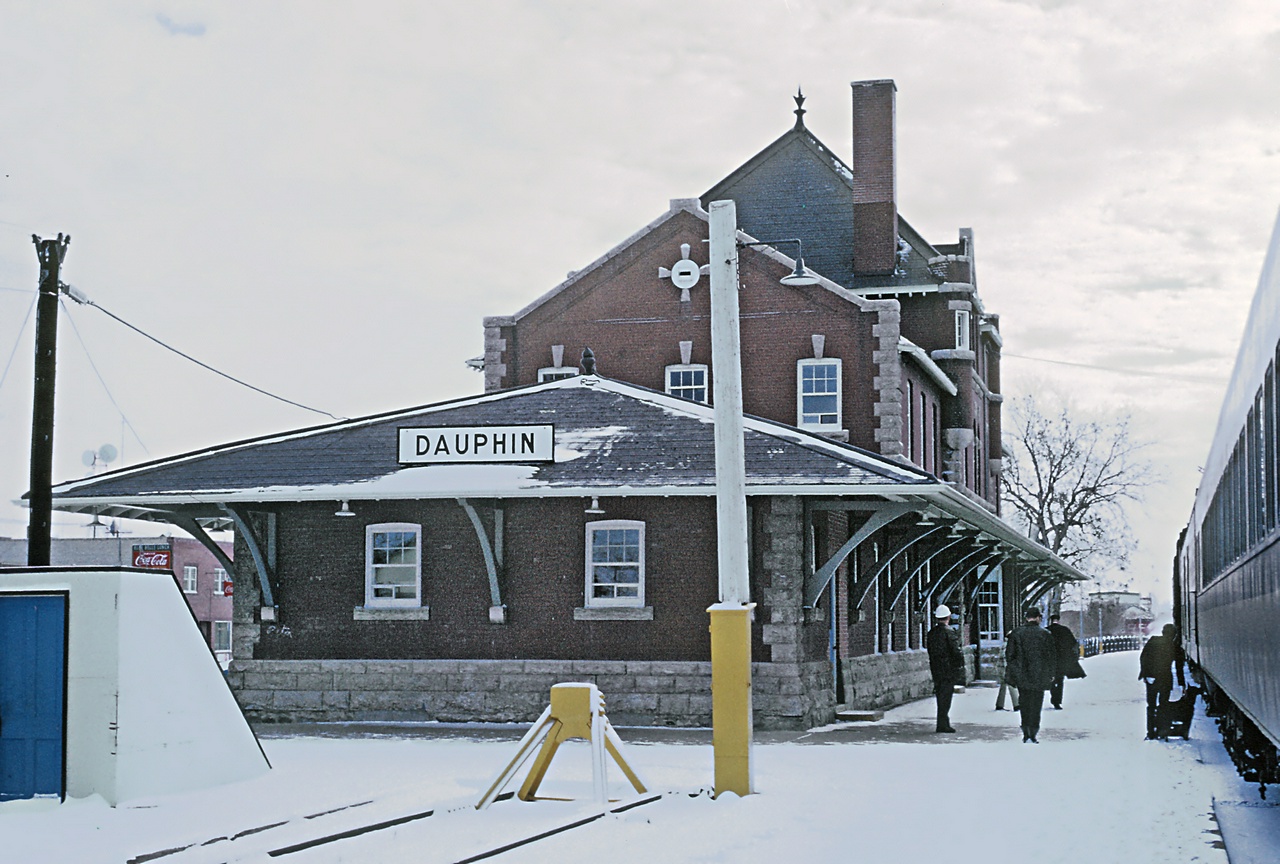
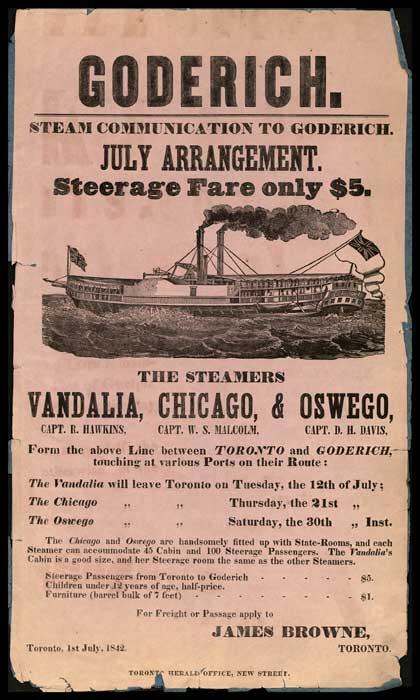
A poster advertising low-price tickets or “steerage fare” between Goderich, Ont., and Toronto in 1842.
Category: #ephemera
Source: Baldwin Collection of Canadiana.
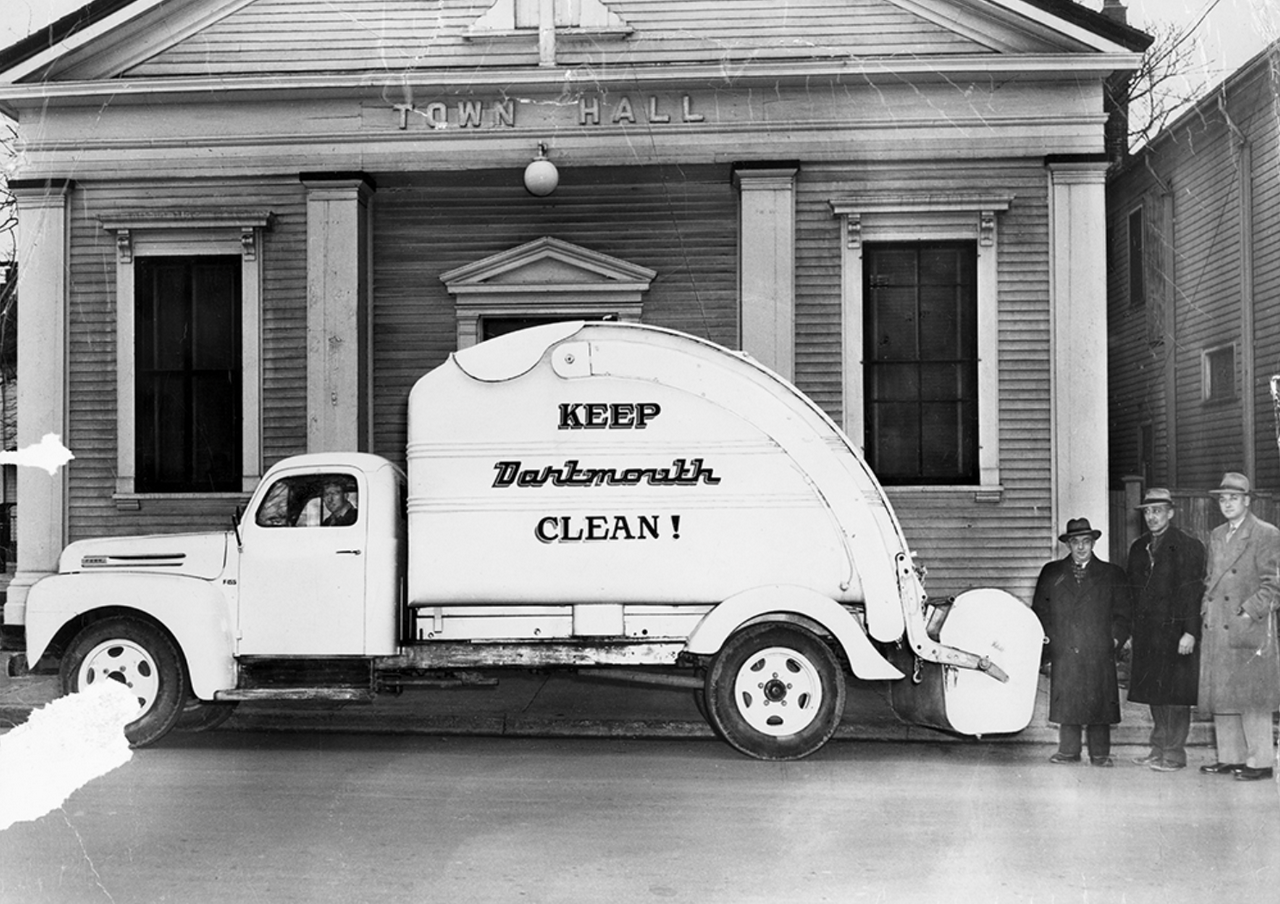
Town Hall on Ochterloney Street, Dartmouth, N.S., in the 1950s. Credit: Halifax Municipal Archives.
Category: #municipalbuildings
Link to source.
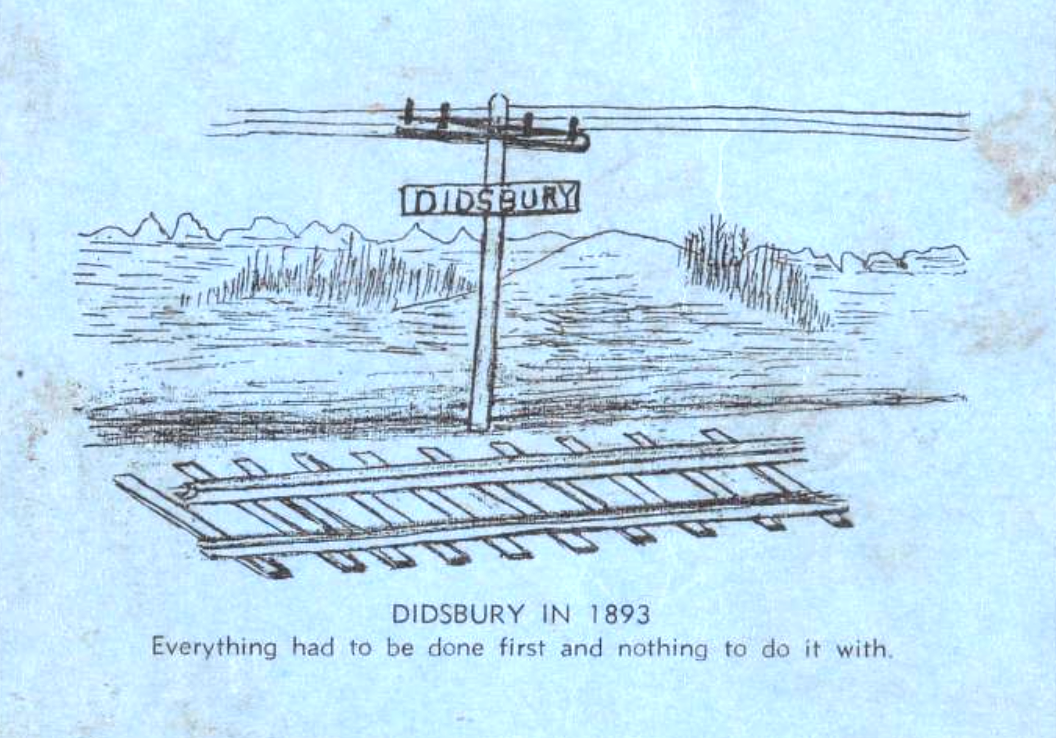
A pen-and-ink drawing depicting the Calgary and Edmonton Railway (C&ER) station in Didsbury, Alberta, as it looked in 1893. Illustration by M. Weber.
The water tower in Estevan, Sask., pictured in 2008, with the city’s name in quotation marks. Credit: Estevan Art Gallery and Museum via the Canadian Water Tower and Standpipe Directory.

Category: #watertowers
Link to source.


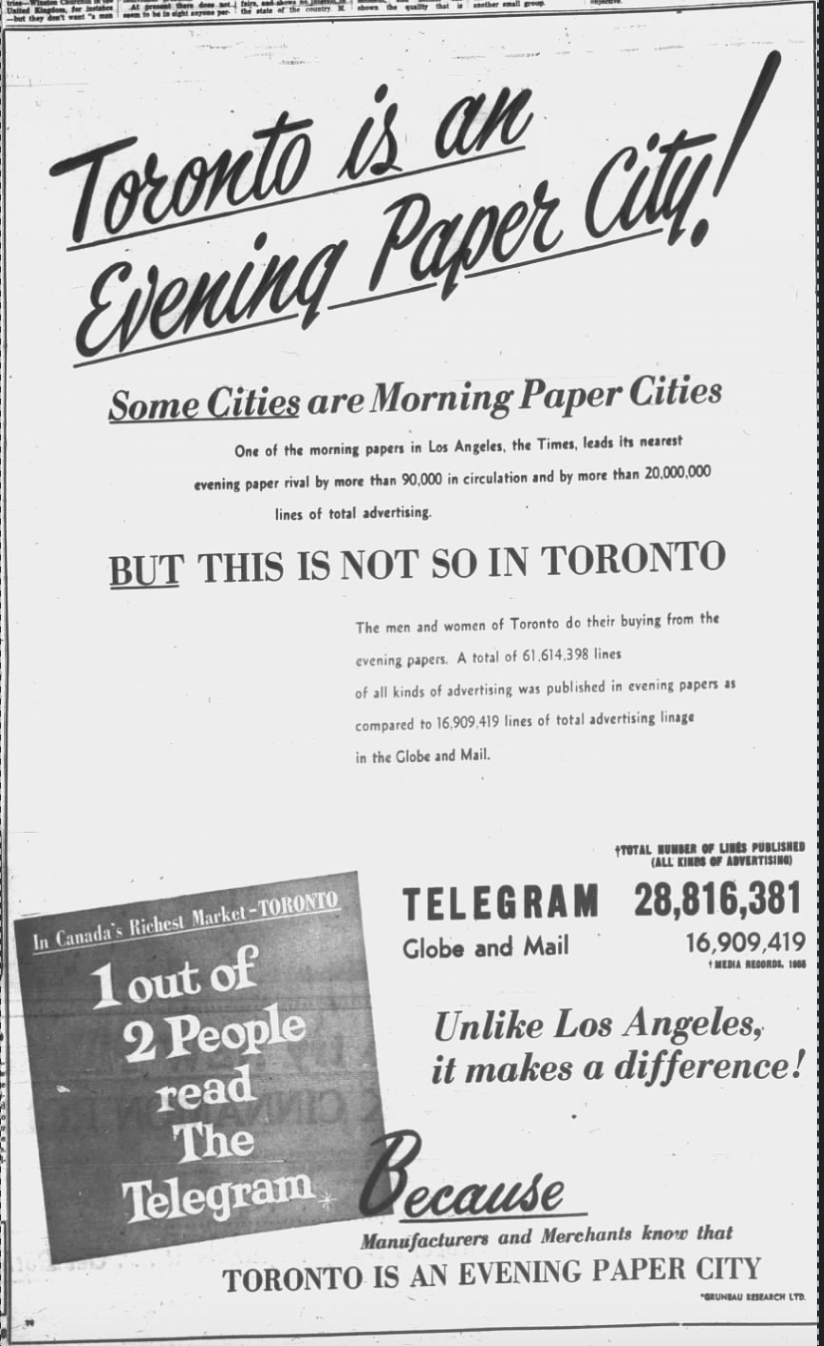
An ad in the Toronto Telegram in 1956 declaring Toronto “an evening paper city.”
Category: #advertisements
Test
Place names on postcards
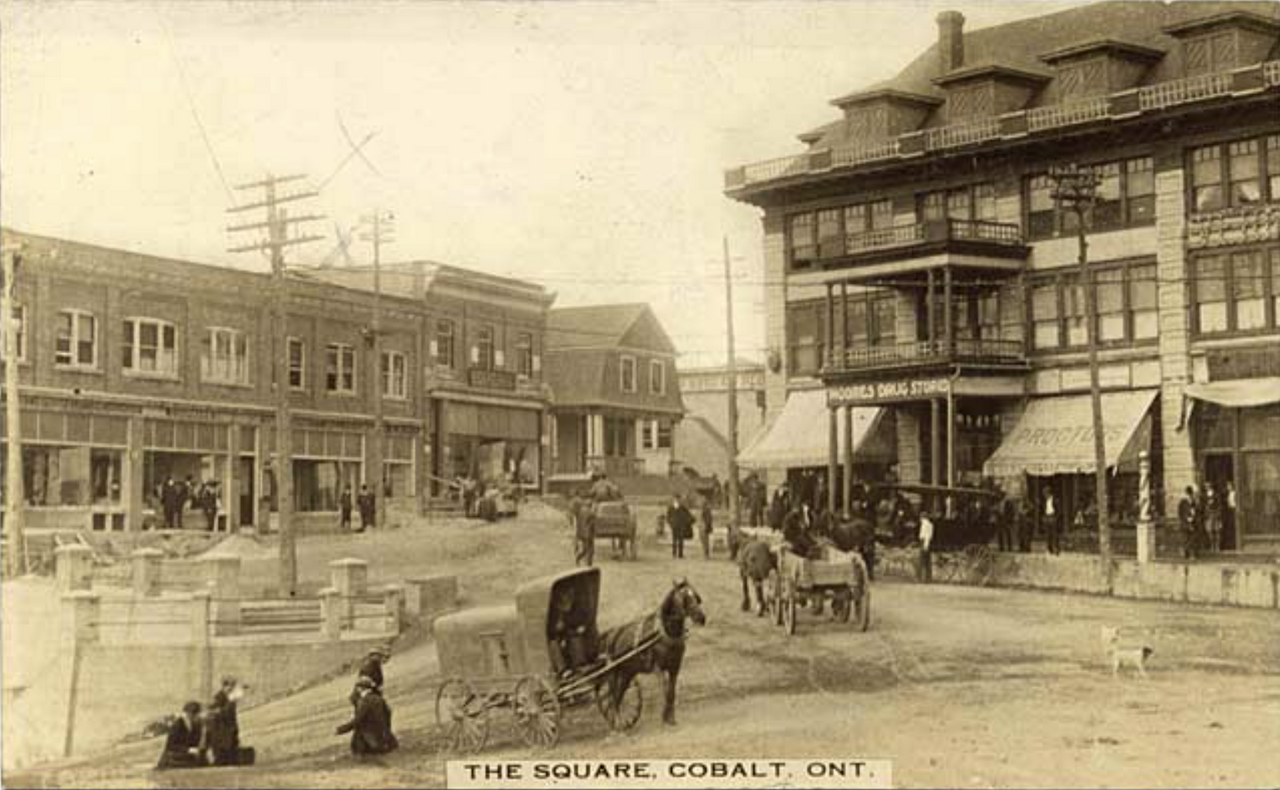
Above: A splendid sepia-toned postcard depicting Cobalt, Ont., circa 1910.
Image via vintagepostcards.ca.
Category: #postcards
Silton in the Spotlight
The small Saskatchewan village of Silton, population 70, blipped onto my radar this week. Here’s a link to the CTV news story if you’re interested in the local developments there.
Glancing at the story, I thought the name Silton was familiar—a hunch no doubt stemming from my hockey history work elsewhere. It’s the birthplace of Chicago Black Hawks legend Harold “Mush” March (1908–2002).
For confirmation of this, there’s even a mention of the old NHLer in a “Fun Facts” section on Silton’s community’s website: “He made hockey history when he scored the first goal in the old Maple Leaf Gardens in 1931. He kept the puck and dropped it at the final game at the Gardens in 1999.”
How long had Silton village been a going concern when Mush March was born? About 25 years. Its name, according to author Bill Barry’s Geographic Names of Saskatchewan, traces to Old English language roots.
Silton (OE Scylfe + tûn, “farmstead by a shelf”), Dorset, England, had been the home of the pioneering Benjafield family. Charles Benjafield was the Silton postmaster until the office moved to the railhead in 1910.
So there’s some background on the name. It was Benjafield’s doing apparently.
Meanwhile, the current welcome sign approaching town on Highway 322 features the black-metallic image of steam train and the words “Village of Silton – Incorporated 1914.”
Let me know if you visit. It’s been about six years since I was in the area north of Regina.